

Canada Spy Report Flags India Among 5 Foreign Interference Actors Involved In Espionage, Cites Khalistan Threat
In 2025, main perpetrators of foreign interference and espionage against Canada remained China, India, Russia, Iran, and Pakistan, CSIS said. Image courtesy: RNA

At a time when both India and Canada appear to be reworking their ties, Ottawa’s top intelligence agency has named India among 5 countries as key actors involved in foreign interference and espionage activities. The CSIS report mentioned India, China, Pakistan, Iran, and Russia.
In its 2025 annual report, the Canadian Security Intelligence Service (CSIS) said China and India remain among the “main perpetrators” of such activities, alongside Russia, Iran and Pakistan. Foreign interference, as defined in the CSIS Act, includes activities that are “detrimental to the interests of Canada” and are “clandestine or deceptive,” often targeting democratic institutions and specific communities.
CSIS espionage, foreign interference report: What concerns has it raised about India?
The report states that India has historically cultivated “covert relationships with Canadian politicians, journalists and members of the Indo-Canadian community to exert its influence and advance its interests.” This has included transnational repression (TNR) activities, such as surveillance and other coercive tactics meant to suppress criticism of the Government of India and create fear in the community, CSIS added.
It went on to add that Canada must remain “vigilant” given the presence of individuals supporting Khalistan separatism, noting that “India acts to counter perceived threats to its domestic stability, including Khalistan separatism.”
How does this relate to the Nijjar case and past tensions?
The report comes against the backdrop of a major diplomatic rift between India and Canada following Ottawa’s allegation that Indian agents were linked to the 2023 killing of Khalistan separatist leader Hardeep Singh Nijjar. The former Justin Trudeau government had then expelled 6 Indian diplomats, including the high commissioner, prompting reciprocal expulsions by India. New Delhi strongly denied the allegations.
These developments had pushed bilateral relations to one of their lowest points in recent years.
Why is the timing of the report significant now?
The release of the CSIS report coincides with ongoing efforts by both countries to repair ties.
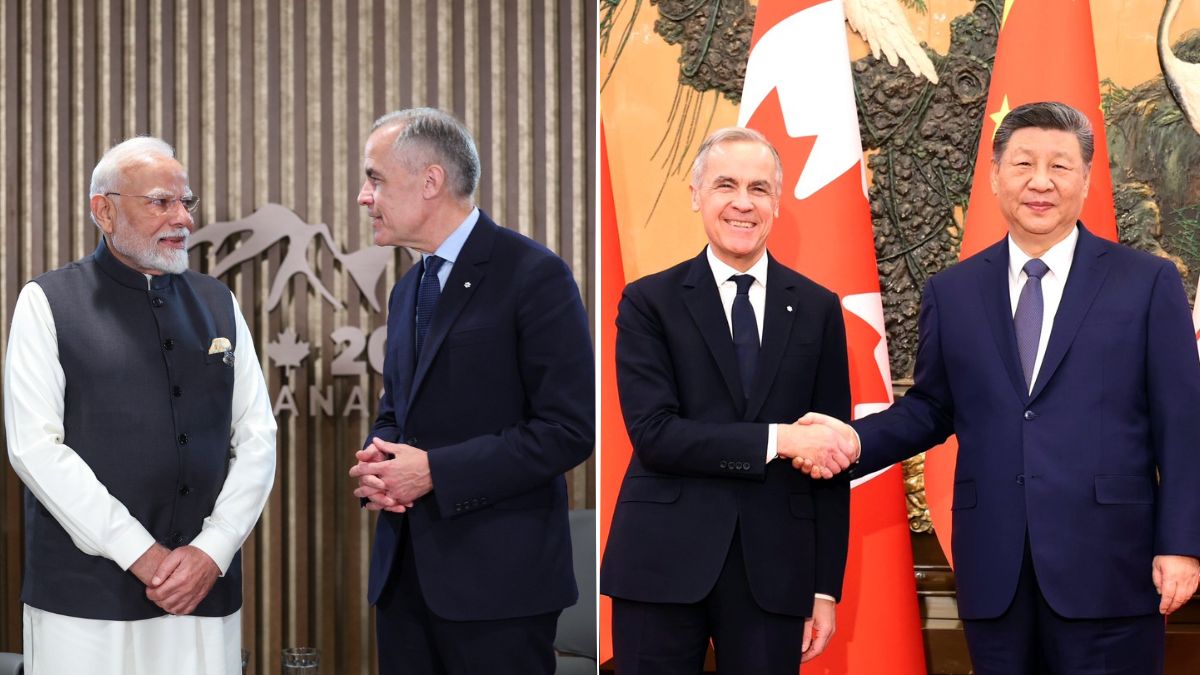
Prime Minister Mark Carney has sought to reset relations, inviting Prime Minister Narendra Modi to the G7 summit in Alberta last year and later visiting India in February.
Before that visit, a senior Canadian official had said India was “no longer involved in foreign interference and transnational repression in Canada,” a remark that drew criticism from national-security experts. Foreign Affairs Minister Anita Anand later clarified that no country, including India, receives a free pass.
What does the report say about other countries?
While India is highlighted, the report places significant emphasis on China’s evolving espionage tactics.
CSIS said Chinese intelligence services are increasingly using fake job advertisements to recruit Canadians with access to sensitive information. “The PRCIS takes advantage of the financial difficulties and career ambitions that drive some applicants,” the report noted.
Russia was described as engaging in espionage, sabotage and disinformation campaigns, including the use of AI tools to influence public opinion.
Iran was identified as a “persistent and aggressive” actor in transnational repression, while Pakistan was also named among countries involved in foreign interference activities.
How is Canada responding to these threats?
CSIS said it has stepped up monitoring and countermeasures, including reviewing federal research funding for national security risks, tracking sensitive technology transfers, conducting security assessments of foreign investments, coordinating with international partners.
The agency is also focusing on emerging strategic areas like the Arctic, where countries such as Russia and China are showing increasing interest due to resource potential and new trade routes.